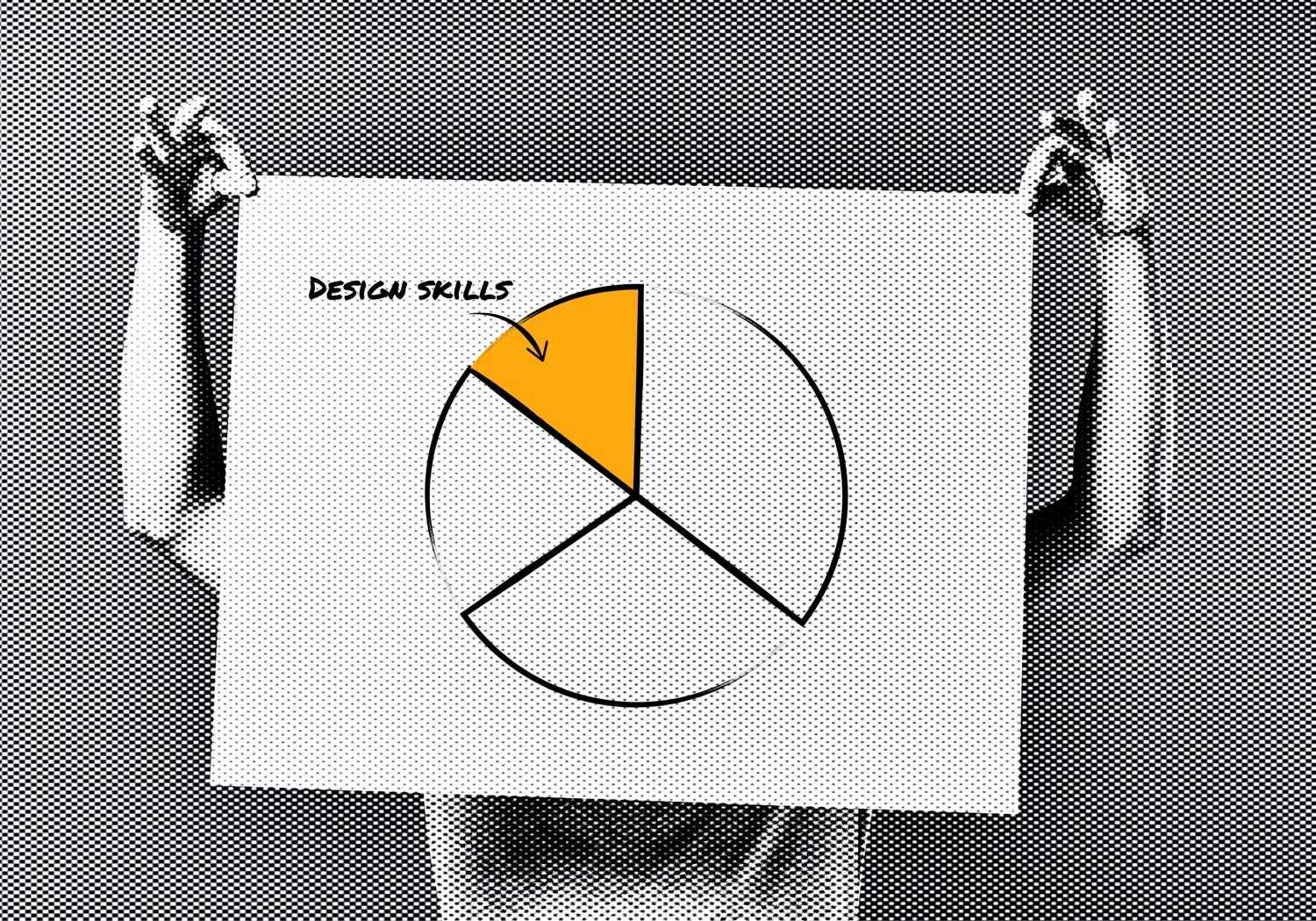
I’ve worked on plenty of corporate reports, both in-house and freelance, and the one thing I can take away from those experiences is: good design is not enough.
For marketing managers racing towards a hard deadline, managing stakeholders, and trying to impress the C-suite with a good outcome, a designer needs to offer so much more.
So what makes the difference between a sound designer and a designer who gets return clients?
Let’s mosey on down and take a look at what I believe are the three most critical skills.
1. Communication

Your job as a designer is to be an interpreter. You take briefs, feedback and queries from multiple voices (executives, department heads, clients) and interpret them into a design that solves a business problem.
Communication is a key skill that designers need from start to finish.
From getting the proper project brief to taking feedback on the suggested solution.
This means:
Joining calls and actually listening to what stakeholders want
Asking clarifying questions instead of guessing
Explaining design decisions in business terms, not design jargon
Keeping their cool when stakeholders contradict each other
Why it matters: Successful projects rely on effective teamwork. A designer who lacks communication skills creates a bottleneck in the production process.
2. Timeline ownership

No one wants to feel like they're nagging. So owning your part of the timeline is essential for a smooth production process. Try not to be reactive, but proactive when providing your stakeholders with key updates. Successful designers need to manage their own deliverables and flag issues early.
This includes:
Breaking the project into realistic milestones
Proactively updating stakeholders on progress (not just responding when chased)
Building in buffer time for unexpected revisions
Flagging when timelines are unrealistic
Why it matters: Marketing managers are already tracking a dozen moving parts. Be a designer who makes their workload lighter, not heavier.
3. Design under pressure
Working on complex reports with multiple stakeholders can feel like running a relay race. Turnaround times can be tight, and the crunch of the final finish line can be nerve-racking. Maintaining visual standards under this pressure is the true test of a designer.
This means:
Being flexible and prepared to revise layouts on the fly
Making efficient design decisions that also feel cohesive
Knowing when to flag a brand issue vs. just handling it
Using software skills to work efficiently
Why it matters: Stakeholders will judge the whole report by its visual consistency. If some pages look out of style, that reflects on you and the client.
The advantage
Most designers focus on portfolio aesthetics. My goal is to be someone marketing managers actually want to work with.
My aim is not just to get hired, it’s to be trusted with the projects that matter most